Care Connect — the phone system that knows who is on call
An on-call phone system for small healthcare practices. Patients call the practice's normal number, the shift schedule decides who is covering, and the clinician's own phone rings.
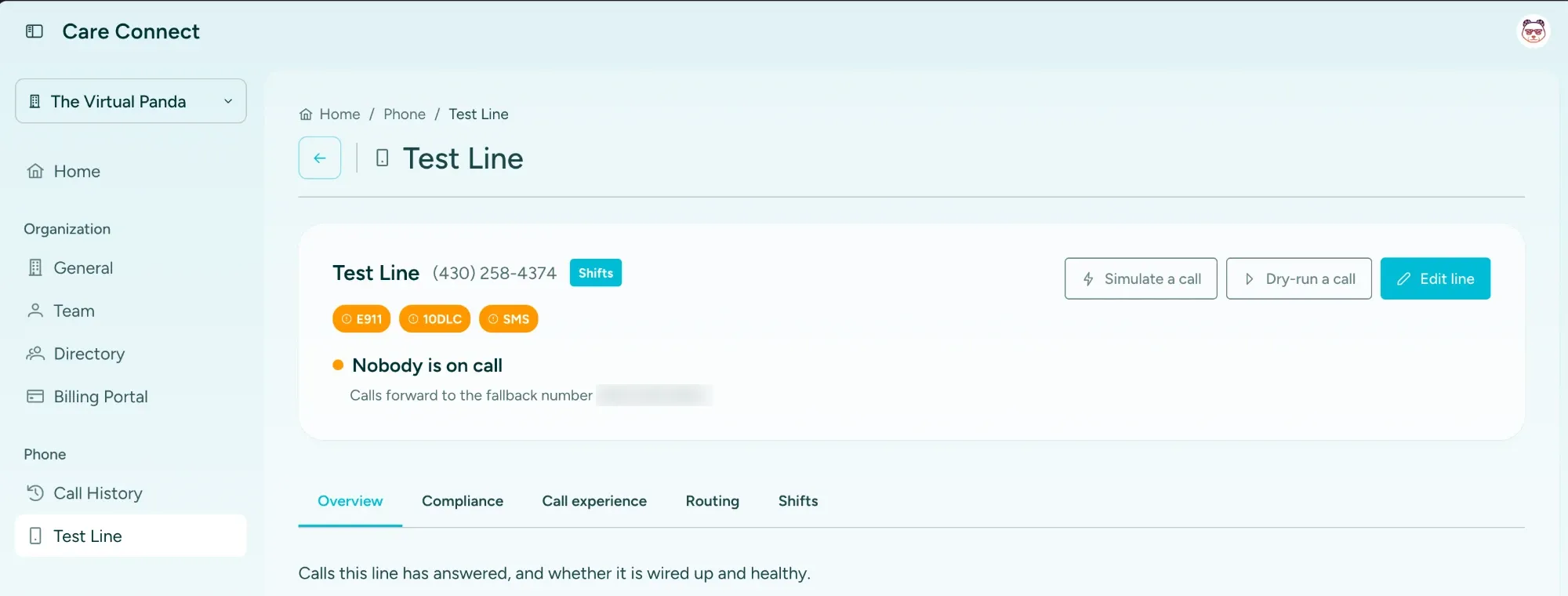
Care Connect is for small outpatient practices where a clinician genuinely takes call after hours: primary care, pediatrics, OB, behavioral health, home health, hospice. Their choices today are a live answering service that relays messages by phone and keeps no record, or a forwarding chain that ends at somebody’s personal cell.
Care Connect replaces both. The practice’s numbers point at a shift schedule, an incoming patient call follows the schedule to whoever is on right now, and that person’s own phone rings over the ordinary phone network. No app has to be open, no login, no data connection. Anything missed lands in voicemail and call history that the practice owns.
What it does
- Build a shift schedule per number and assign it to the people who take call, with overlaps prevented rather than discovered
- Route incoming calls to the clinician on call, with a fallback when nobody answers
- Claim numbers by area code and configure their label, call flow, and fallback without filing a ticket
- Keep every call logged and drillable, with voicemails the team can play, mark, or clear
- Hold the practice’s contacts in one roster, tagged however the organization thinks
- Invite teammates into roles the practice defines, so the front desk, the clinicians, and the owner each see what they should
How it is built
It is built for health data from the start: HIPAA in-scope hosting under a BAA, a telephony account per practice with its credentials encrypted at rest, roles the practice defines, and an audit trail of who did what. There is no security tier to buy up to.
One flat plan covers the whole practice, every usage rate is published, and there are no seat tiers to compare. A twelve-person practice pays what a two-person one does.
Under the hood it is an Angular app and two Astro sites over one ASP.NET Core API on PostgreSQL, with Twilio for voice and SMS, Stripe for billing, and Azure for the parts that touch a patient record. Its blueprints are written in Eidos.